How to Plan a Hawaii Honeymoon
A thoughtful guide to choosing your islands, pacing your days, and honoring what this place actually is
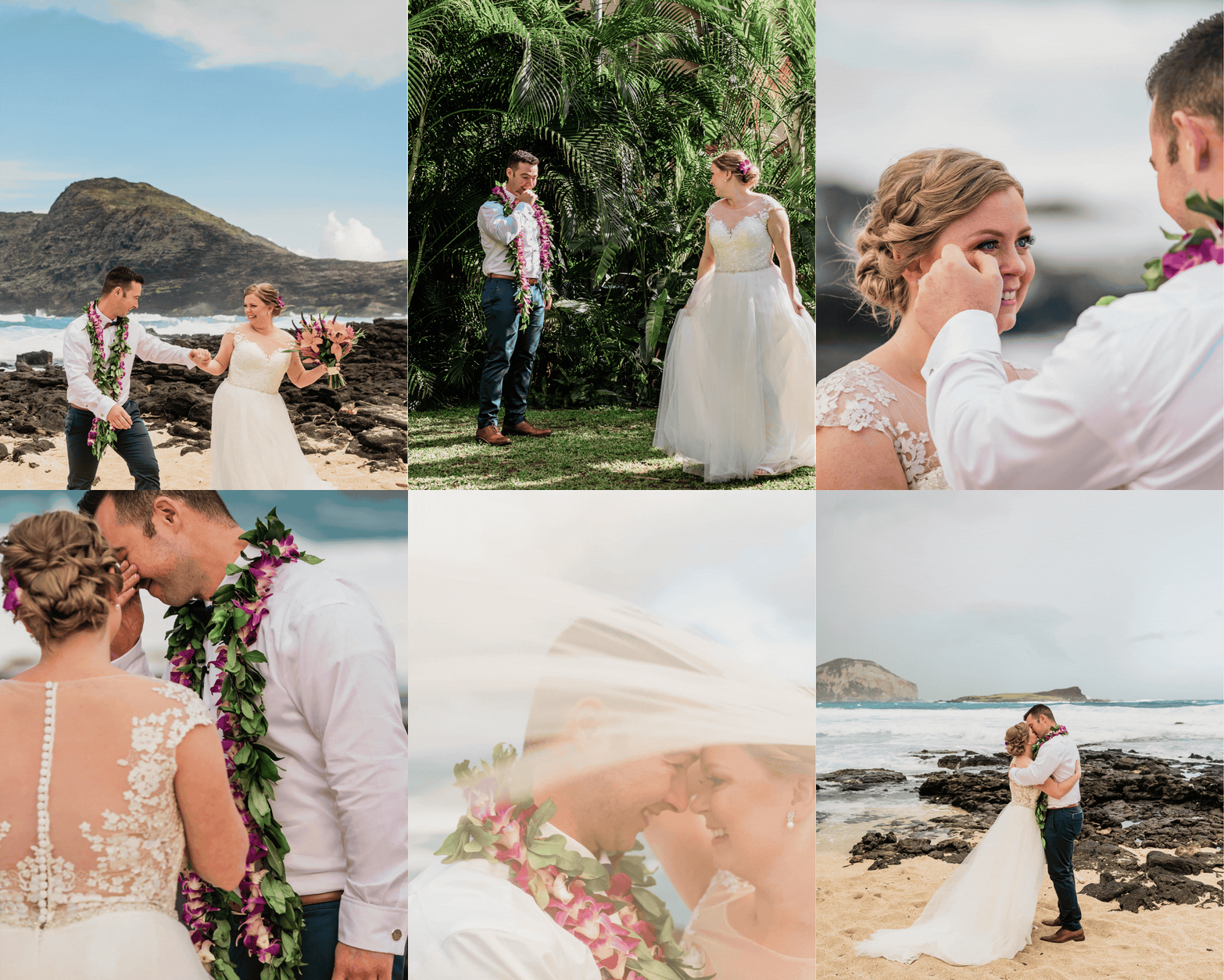
Hawaii offers a dreamy blend of pristine beaches, lush landscapes, and luxurious resorts, creating the ultimate romantic getaway for newlyweds. With its unique mix of adventure, relaxation, and breathtaking natural beauty, it’s the ideal destination to celebrate your love.
There are destinations that are beautiful, and then there are destinations that hold memory.
Hawaii, for me, is the latter.
It is where I stood barefoot and promised my life to someone. It is where I learned, in real time, that a place can feel expansive and grounding at once. It is where I discovered that landscapes can humble you, and that humility is not a bad posture with which to begin a marriage.
So when I write about planning a Hawaii honeymoon, I am not writing as someone who skimmed a guidebook. I am writing as someone who has woken up to the particular softness of morning light over the Pacific, who has navigated inter-island flights with a wedding dress in a carry-on, who has sat at dinner exhausted not from stress but from fullness: of experience, of gratitude, of sensory overload.
Hawaii is one of the most romantic destinations in the world. It is also one of the most misunderstood.
Couples approach it with enthusiasm and often leave planning it with fatigue, because they assume that proximity equals simplicity. The islands are close together, after all. The flights are domestic. English is spoken. How complicated could it be?
The complexity is not logistical in the traditional sense. The complexity lies in the fact that each island is its own ecosystem, culturally, geographically, and emotionally. Planning a Hawaii honeymoon well requires discernment. It requires restraint. It requires an honest assessment of how you travel, not how you wish you traveled in theory.
And that is where most couples begin to drift.
The Myth of the “Perfect” Island
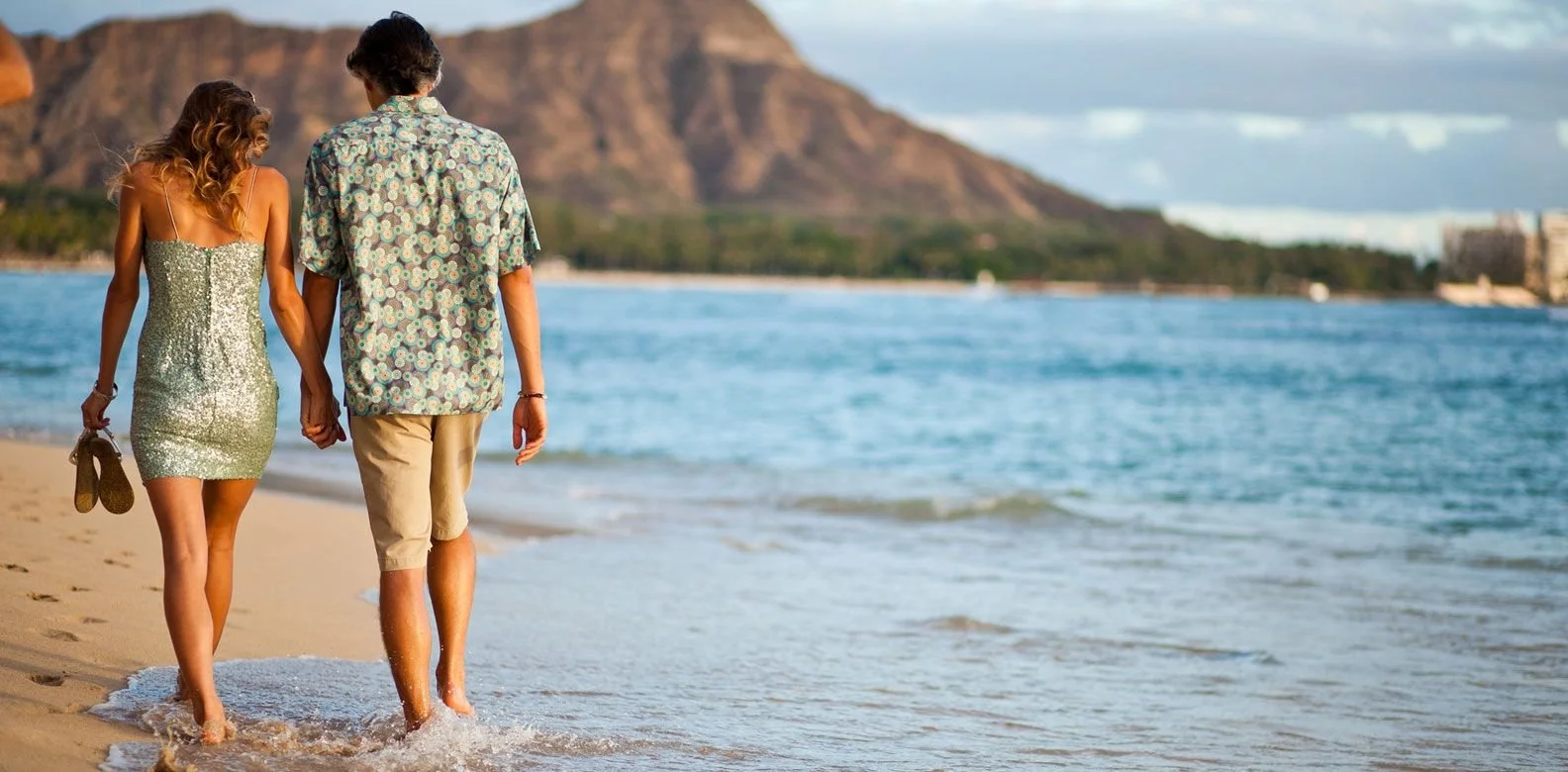
For a Hawaiian honeymoon, plan for at least 7-10 days to fully experience the islands’ diverse beauty and activities. The best time to visit is during the spring or fall, when the weather is warm and the crowds are smaller, ensuring a more intimate and relaxed escape.
The internet will encourage you to ask, “Which Hawaiian island is best for a honeymoon?” It is a seductive question because it suggests a correct answer. It implies that if you simply compare long enough, the right island will emerge triumphant.
There is no best island.
There is an island that matches your tempo.
There is an island that aligns with how you experience beauty.
There is an island that gives you the particular combination of stillness and stimulation that feels restorative rather than exhausting.
When my husband and I chose Hawaii for our wedding and honeymoon, we did not ask which island was most famous or most photographed. We asked where we would feel most ourselves. That distinction changed everything.
Oahu offers dynamism. It holds the tension of city and sea in a way that can feel invigorating if you enjoy movement and variety. Maui, particularly in areas like Wailea, carries a polish that feels quietly celebratory without being performative. Kauai is less curated and more elemental; it does not entertain you so much as it invites you to witness it. The Big Island feels expansive in a geological sense, reminding you that land can still be in the process of becoming.
None of these are superior. But they are profoundly different.
Island Hopping Is Not a Badge of Honor

For a Hawaiian honeymoon, start with Maui for its mix of stunning beaches, luxury resorts, and scenic drives like the Road to Hana. Pair it with Kauai for a more secluded, nature-filled experience, featuring lush rainforests, dramatic cliffs, and serene hideaways perfect for romance.
Another impulse that emerges quickly in Hawaii honeymoon planning is the desire to “do it all.” The logic is understandable. You are traveling across an ocean; surely you should maximize exposure.
But Hawaii does not reward frenzy.
Inter-island flights are short in the air, yet transitions accumulate. You check out of a hotel that you have only just begun to settle into. You return a rental car. You navigate another airport. You repeat the process on arrival. What seems efficient on a spreadsheet becomes fragmented in lived experience.
In my professional experience, and in my personal one, two islands over seven to ten nights offers contrast without erosion. It allows you to feel the shift in landscape and energy without sacrificing the continuity that makes a honeymoon feel immersive. A honeymoon is not a survey course. It is not an academic overview of the Hawaiian archipelago. It is the beginning of something.
Beginnings benefit from presence.
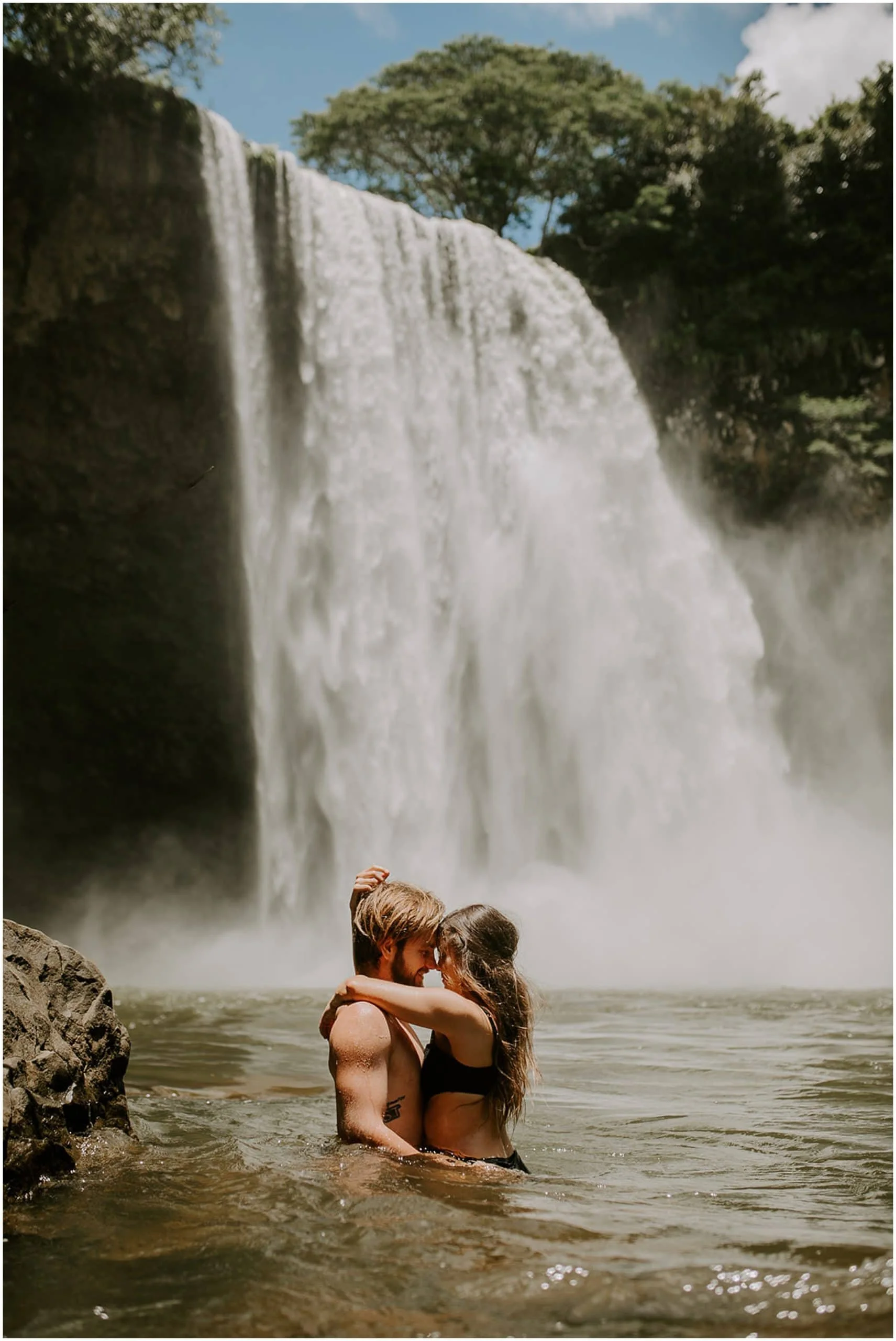
When I’m working with clients, there tends to be two camps of travelers: I want relaxation or I want adventure… & since opposites attract, I also tend to get “BOTH!” Hawaii luckily has the best of both worlds when it comes to excursions so here is what I recommend to my newlyweds.
Hawaii Is Not All-Inclusive, and That Matters
For couples who are also considering Mexico or the Caribbean, this distinction deserves honesty.
In an all-inclusive setting, much of your experience is architecturally contained. You wake up and the day unfolds within a single property. Meals are integrated. Evening entertainment is built in. The rhythm is curated for you.
Hawaii asks something different.
You will drive. You will make dinner reservations. You will research beaches. You will decide whether today is a hiking day or a reading-on-the-lanai day. That freedom can feel exhilarating, particularly if you value autonomy and culinary exploration. It can also feel heavier if what you crave is effortlessness.
Neither is better. But they are not interchangeable experiences.
When we honeymooned in Hawaii, I remember feeling grateful for the space to choose: to wander into a local restaurant rather than return to a buffet, to pull off the road because the light on the water demanded attention. That freedom is part of the romance. It simply requires intention in advance.
The Discipline of Not Over-Scheduling
Hawaii tempts you with spectacle. Sunrise at Haleakala. The Road to Hana. Helicopter tours over the Na Pali Coast. Snorkeling with manta rays. Luaus that promise cultural immersion. Each experience is compelling on its own. The danger lies in accumulation.
I have seen couples arrive home from Hawaii more exhausted than when they left because they attempted to optimize every hour. They confused abundance of opportunity with obligation.
A well-planned Hawaii honeymoon includes anchor experiences, two or three per island, that provide structure and anticipation. Around those anchors, you leave room. Room for long breakfasts. Room for unplanned swims. Room for silence.
It is in that room that connection deepens.
If You Are Considering Hawaii

A helicopter ride on your honeymoon offers breathtaking aerial views of Hawaii’s stunning landscapes, creating an unforgettable, romantic adventure that’s perfect for making lasting memories.
I often have couples comparing Hawaii to Mexico or the Caribbean. The comparison is understandable. They are all tropical. They all promise beauty. They all photograph well.
But the experiences are architecturally different.
Hawaii asks you to engage. To drive. To choose. To explore.
An all-inclusive resort invites you to exhale immediately. To remain in one contained, curated environment.
Neither is superior. They are simply distinct.
When I help couples decide between them, we talk less about scenery and more about temperament. Are you energized by autonomy? Or restored by containment? Do you enjoy planning dinners? Or would you rather walk downstairs and have it handled?
These are adult questions. And adult questions deserve adult answers.
A Thoughtful Structure for a 10-Day Hawaii Honeymoon
If I were designing a Hawaii honeymoon now, knowing what I know, both personally and professionally, I would build it like this:
Five nights on your first island. Long enough to settle in, adjust to time difference, and feel known by your surroundings. One or two signature excursions. Several unstructured days.
Four nights on your second island. A deliberate shift in landscape. One meaningful adventure. Slow final evenings.
Departure without rushing.
The goal is not maximal exposure. It is layered immersion.
Why I Still Recommend Hawaii Over & Over
Even with all of this nuance, the logistics, the cost, the need for discipline, I still recommend Hawaii often. Because when it is planned with intention, it feels expansive in a way few destinations do.
It feels like beginning your marriage in a place that understands scale.
The ocean is vast. The cliffs are dramatic. The land is still forming. You stand in it and feel small, but not insignificant. You feel part of something older and larger than yourself.
That is not a bad metaphor for marriage.
If Hawaii is on your heart but you are unsure how to structure it — which islands, how long, whether to combine it with something else — I would love to help you think it through. This place means something to me, and I approach it with the care it deserves.