Legal vs. Symbolic Ceremony: Which Is Right for Your Destination Wedding?

A symbolic ceremony has no legal bearing but makes up over 90% of destination weddings. The symbolic ceremony looks and feels the same, just without the legal paperwork.
I made the legal vs symbolic destination wedding decision for my own wedding, and I chose legal.
We got married in Hawaii, which meant the paperwork was about as easy as it gets. Same country, same language, no apostilles, no certified translations, no consulate appointments. On paper, the simplest version of a legal destination wedding that exists.
It still pulled us out of our own trip.
There was an appointment. The appointment had a time. That time landed in the middle of a day we would have otherwise spent doing something we flew across an ocean to do. And underneath the whole thing ran this low hum of if we miss this, none of it counts. Not a crisis. Just a small, steady tax on a week that was supposed to feel like the opposite of that.
The process itself was genuinely easy. Hawaii is part of the United States and the state has this down to a science.
Now move that exact experience to Mexico. Add birth certificates that have to be apostilled in your home state. Add official translations into Spanish. Add a civil judge whose calendar was not built around your sunset light. Add a rule that you arrive three business days ahead of your ceremony.
That is the actual trade you are weighing. Not whether a symbolic ceremony is somehow less real. How much of your trip you are willing to hand over to paperwork.
Here is everything you need to make the call.
Legal vs Symbolic Destination Wedding: What Actually Changes
Start with the part that surprises most couples. For your guests, almost nothing changes.
A legal ceremony follows the marriage laws of the country you are standing in, and it produces a marriage certificate that country recognizes. Once you file and apostille it back home, you are legally married in the United States too.
A symbolic ceremony carries no legal weight. You exchange vows, you have an officiant, you sign something lovely, and that document is a keepsake rather than a legal record. Couples who go this route almost always handle the legal piece at home, usually at a courthouse or with their own clergy, before they ever get on the plane.
Here is what your guests actually see in either case: two people getting married on a beach.
Same dress. Same aisle. Same vows, and often better vows, because a symbolic ceremony has no required legal language to work around. Same first kiss, same photographer, same tears from your mother. Nobody is checking a filing cabinet.
The difference lives entirely in the logistics, the timeline, and the cost. Which is exactly where you want it to live, because those are things you can plan around.
Why Most Couples Choose a Symbolic Destination Wedding Ceremony
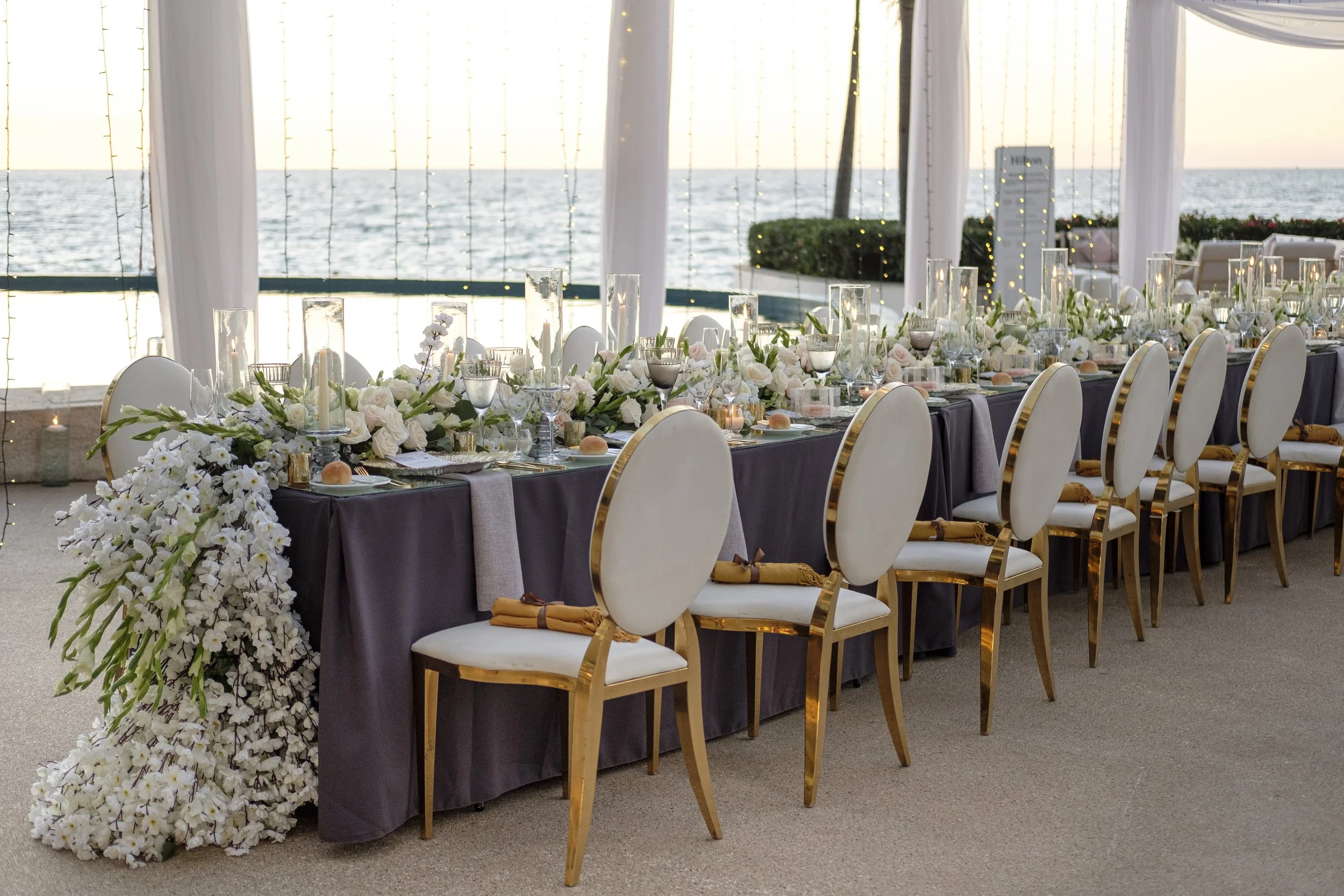
The overwhelming majority of destination weddings are symbolic. Ask any resort wedding coordinator in Mexico or the Dominican Republic and you will hear the same answer.
There are four reasons, and they stack on each other.
Your vacation stays a vacation. This is the one I felt personally. Legal requirements come with appointments, offices, and windows of time you cannot move. Every one of those is a block of your trip you are not spending in the water.
You control the timeline. A legal ceremony abroad depends on a civil judge's availability, document processing, and in some places a mandatory arrival window. A symbolic ceremony happens at the exact hour you choose, which in practice means you get the light you actually want for photos.
It costs less. Legal ceremonies stack fees. Apostilles, certified translations, judge fees, filing costs, and in some destinations a legal ceremony surcharge the resort applies on top of your wedding package.
Nothing hinges on paperwork arriving. If a translated document gets rejected or a certificate does not come through in time, a legal ceremony has a real problem. A symbolic one does not.
The trade is real, though, and I want to name it honestly. Some couples want one wedding date, one anniversary, one moment. Splitting the legal from the celebration can feel like it dilutes the day. If that is you, keep reading to the timing section, because there are ways to make the split feel intentional rather than clerical.
Legal Destination Wedding Requirements in Mexico
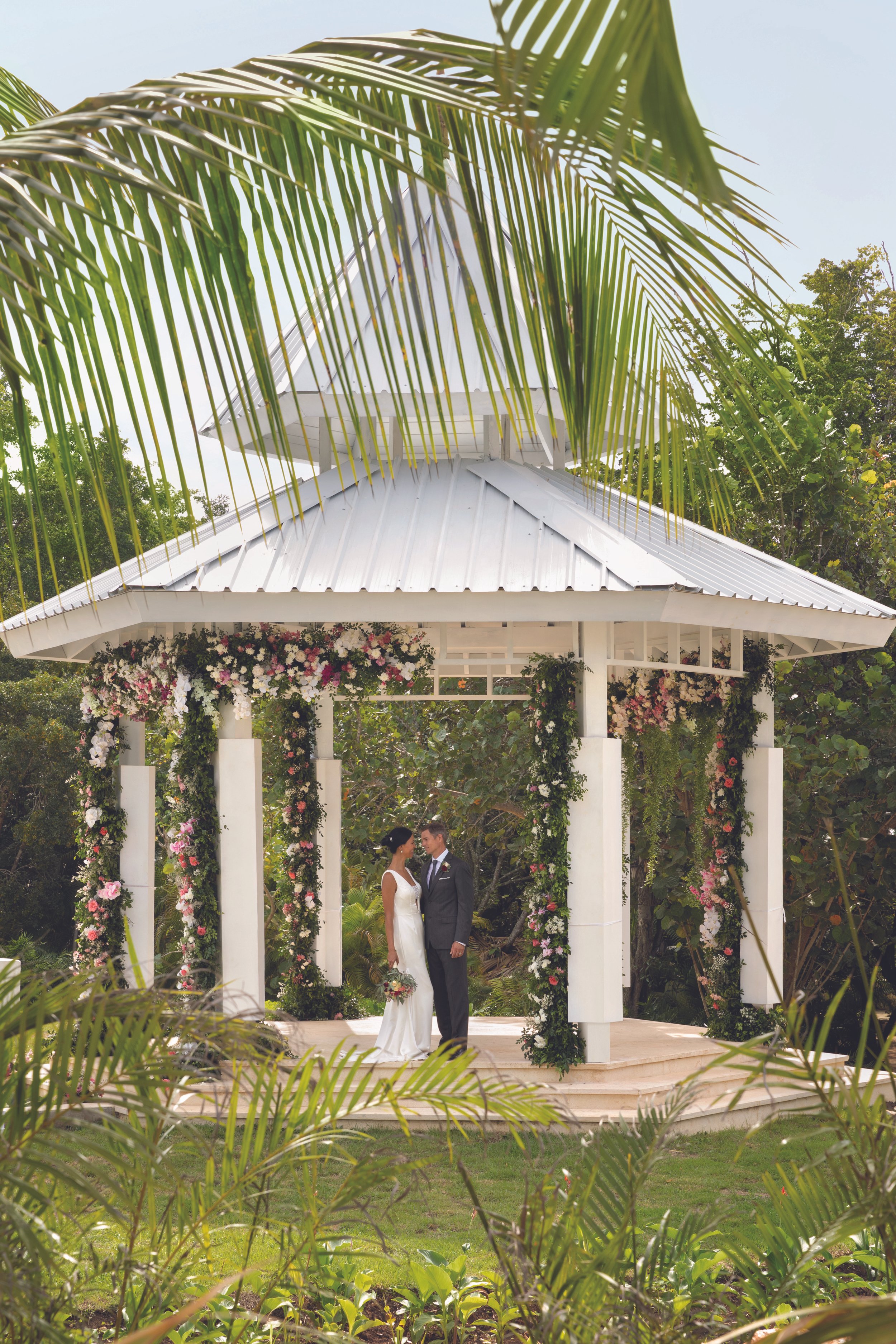
This is where the legal vs symbolic destination wedding question got genuinely interesting in 2026, because the rules changed in the exact places I book most.
What changed: As of June 2026, Quintana Roo removed the mandatory prenuptial medical certificate, along with certain restrictions tied to health conditions. Mexico City and Jalisco made the same change.
Quintana Roo covers Cancun, Costa Mujeres, Playa del Carmen, Riviera Maya, and Tulum. Jalisco covers Puerto Vallarta.
For years, a legal wedding in Cancun meant a blood test drawn in Mexico within two weeks of your ceremony, and sometimes a chest x-ray on top of that. It was the single most common reason couples looked at a legal ceremony in Mexico and said absolutely not.
That requirement is gone in Quintana Roo.
Worth flagging: this change is recent, and a lot of wedding content online has not caught up yet. If you are reading somewhere that you need a blood test to get married in Cancun, that page is out of date.
One important exception. Cabo San Lucas sits in Baja California Sur, a different state, which did not make the same change. Same country, different rules. This is the detail that catches couples off guard, because Mexico sets marriage law at the state level rather than nationally.
What a Legal Ceremony in Quintana Roo Still Requires
Valid passports, plus photocopies
Birth certificates, apostilled in your home state and officially translated into Spanish
Divorce decrees or death certificates where applicable, also apostilled and translated
A marriage application from the local civil registry office
Four witnesses over 18 with valid photo identification
A civil judge to perform the ceremony
Arrival at least three business days before your ceremony date
A declaration of whether you are marrying under separate or joint property
A translator during the ceremony if neither of you speaks Spanish
After the wedding, request certified copies of your acta de matrimonio and get them apostilled before you leave the country. Handling that later from the United States is a considerably worse experience.
If you are weighing regions as well as ceremony types, my Riviera Maya resort and package comparison breaks down what each property actually delivers.
So here is the honest read on Mexico in 2026. A legal ceremony in Quintana Roo is meaningfully easier than it was a year ago. It is still more work than a symbolic one. But if having a single legal wedding date matters to you, the biggest objection just disappeared.
Legal vs Symbolic Destination Wedding in the Dominican Republic
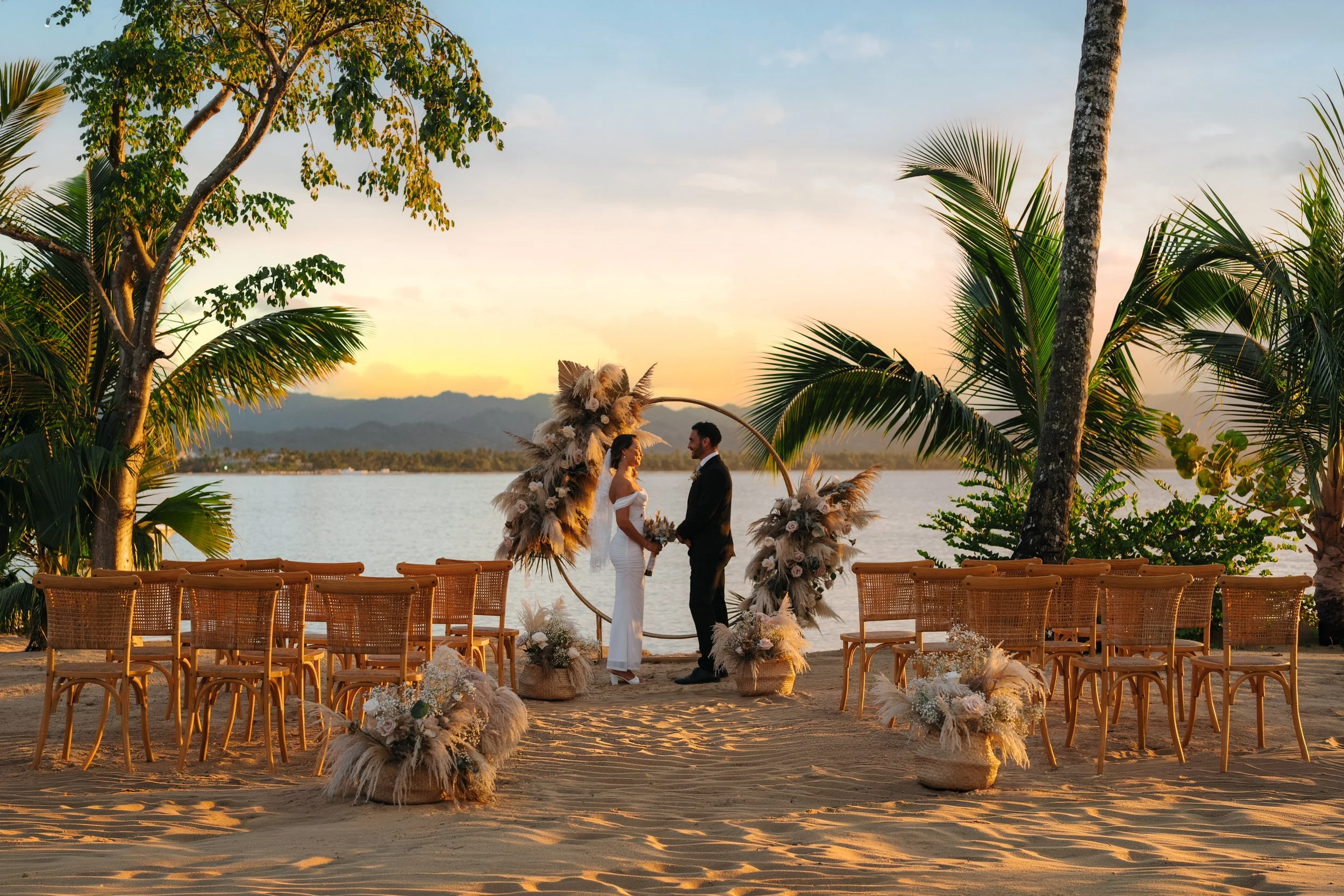
The Dominican Republic is a different story, and I say that as someone who toured eight properties there and came home genuinely impressed.
A legal ceremony in the DR is harder than in Mexico.
Only a judge can perform a legally binding civil ceremony, and judges' schedules are not built around resort wedding calendars. Availability often drives your ceremony time more than your preference does. Documents must be legalized and translated into Spanish by an official translator. You need affidavits of single status, notarized. Birth certificates, passports, and any divorce or death certificates follow the same legalize and translate path. Your witnesses cannot be family members. And if you want a religious ceremony recognized legally, the requirements expand further from there.
Stack the translation, notarization, and legalization fees together and the legal route becomes a real line item rather than a rounding error.
This is why symbolic is the default in the Dominican Republic to an even greater degree than in Mexico. Couples marry at home, then fly down and have the wedding they actually want, at the hour they actually want it.
None of this is a knock on the destination. The W Punta Cana was a standout on my last visit and the value across DR resorts is strong. It just means the ceremony decision is close to made for you before you even start.
How to Time Your Legal Ceremony at Home
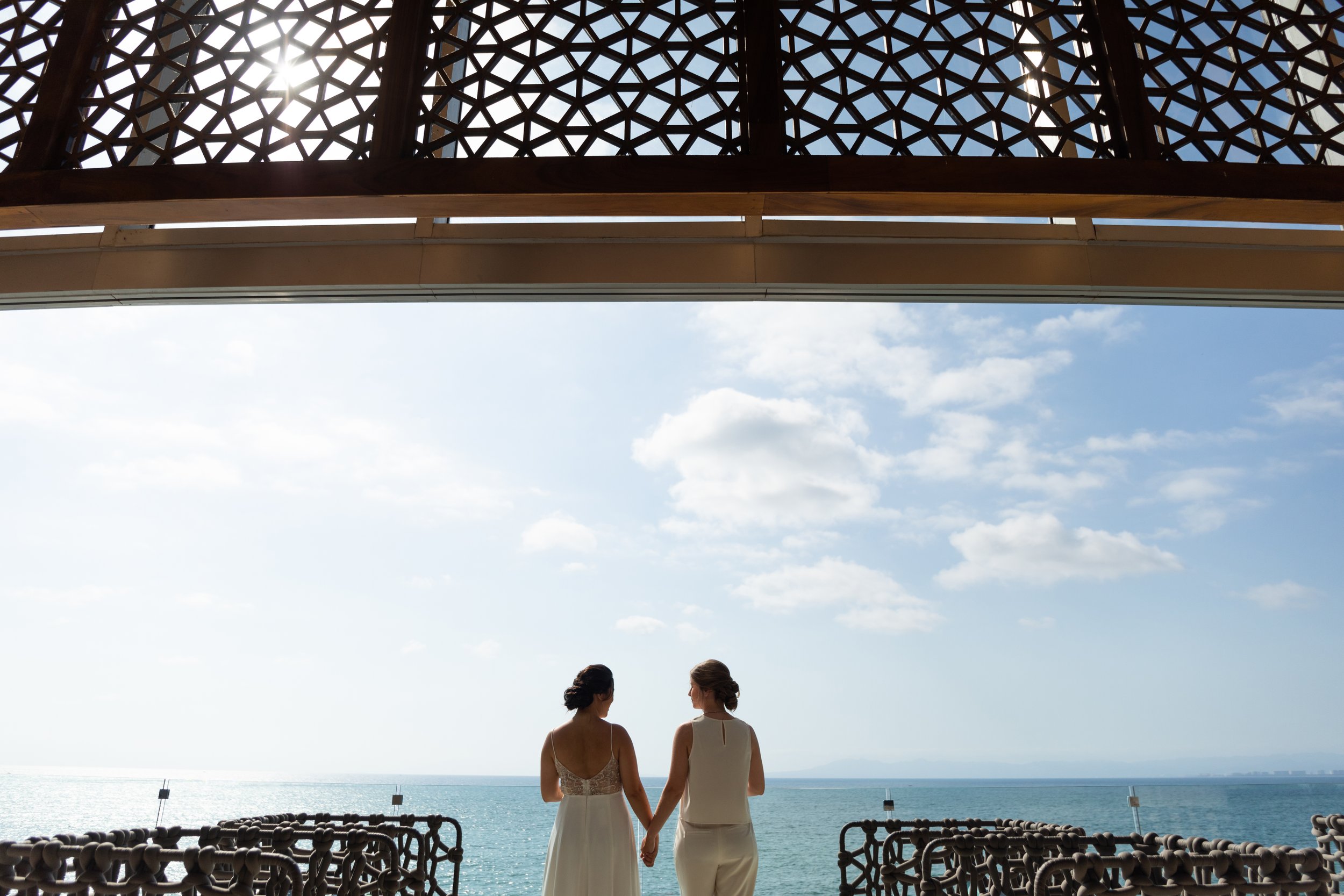
If you decide to handle the legal piece before you travel, the timing deserves actual thought rather than defaulting to whatever is convenient.
Marry legally a year ahead, on the same date. If your destination wedding is May 20, 2027, do the courthouse on May 20, 2026. You get one anniversary instead of two, and you buy yourself a full year to sort out name changes, passports, and insurance before you travel. That last part matters more than couples expect.
Marry legally a few weeks before, with immediate family. Small, intentional, at home. This is the version I recommend when there are people who genuinely cannot make the trip. Your grandmother who is not flying to Cancun gets to watch you get married. That is not a consolation prize. For a lot of families it becomes the most emotional day of the entire process.
Anchor the date to something meaningful. Your parents' anniversary. Your grandparents'. The day you met. If you are choosing a legal date anyway, choose it deliberately.
One administrative warning. Do not change your name before you travel unless your passport is already updated. Book every flight in the name printed on your passport. This is the most common avoidable mistake I see, and it is entirely preventable.
If you are also thinking about what happens after the ceremony, here is how couples combine the wedding and honeymoon into one trip.
Legal or Symbolic Destination Wedding: Common Questions
Will our guests be able to tell the difference?
No. There is no visible difference between a legal and a symbolic ceremony. Unless you tell them, they will not know, and most couples never bring it up.
Is a symbolic ceremony a real wedding?
Yes. It is the ceremony you invite people to, exchange vows at, and remember for the rest of your life. The legal filing is administrative. Most couples find that separating the two makes the symbolic ceremony feel more personal, not less, because there is no mandated legal language to work around.
Can we write our own vows in a symbolic ceremony?
Yes, and this is one of the underrated advantages. Legal ceremonies include required language. Symbolic ones do not, so your officiant can build the entire thing around the two of you.
Do we need a blood test to get married in Mexico?
Not in Quintana Roo, Mexico City, or Jalisco as of June 2026. Many other Mexican states still require a prenuptial medical certificate. Because marriage law is set at the state level, always confirm the current rule for your specific ceremony location.
Which one is cheaper?
Symbolic, in nearly every case. You skip apostille fees, certified translation, judge fees, filing costs, and any legal ceremony surcharge your resort applies.
Can we have a symbolic ceremony and get legally married later?
Yes. Plenty of couples do the destination wedding first and handle the courthouse once they are home. The only reason I usually suggest doing it beforehand is that it removes a to-do from the post-wedding fog.
Who can officiate a symbolic ceremony?
A non-denominational minister, your resort wedding coordinator, or a friend or family member. That last option is more common than people realize and it is often the most meaningful choice available to you.
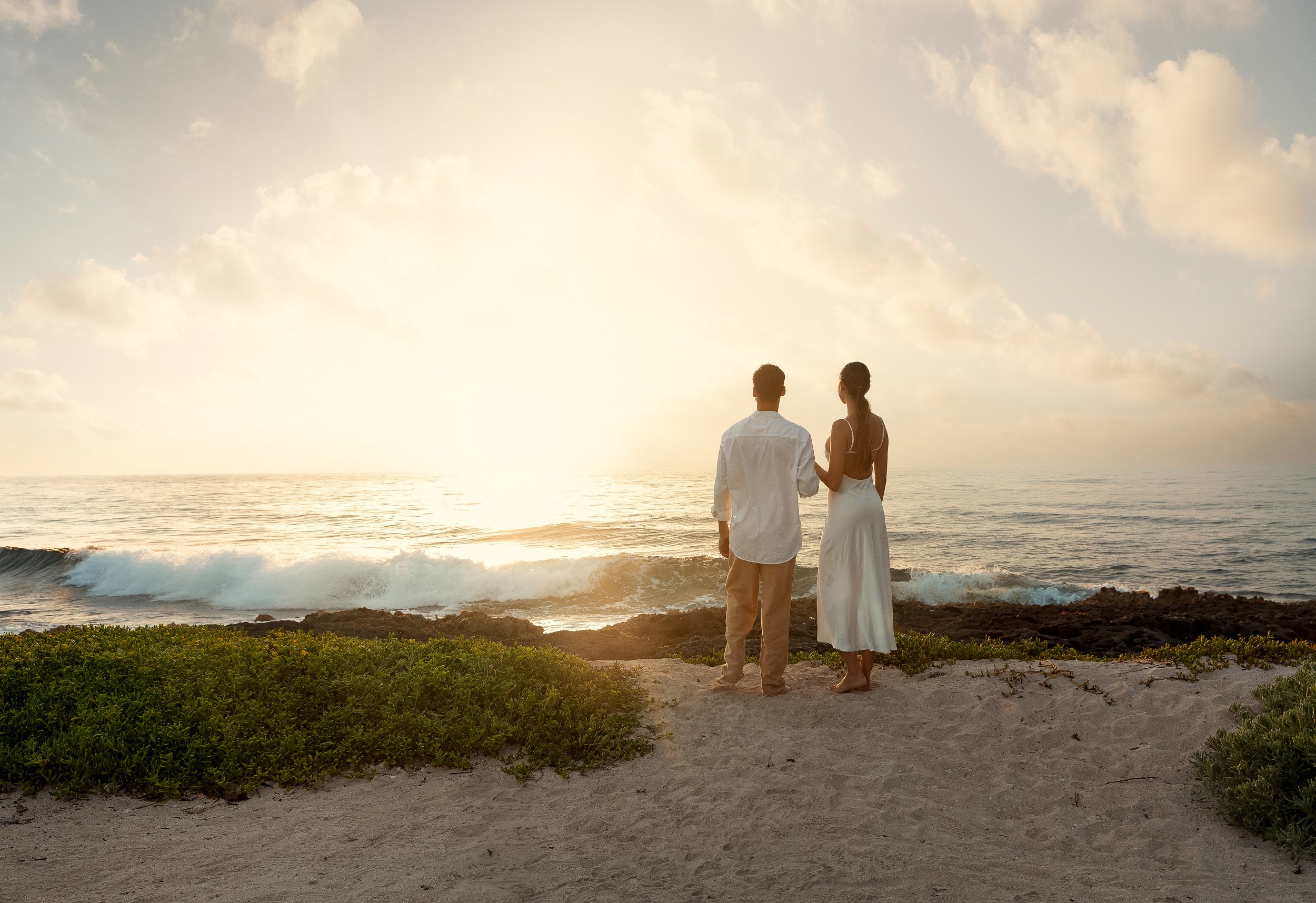
Choosing Between a Legal and Symbolic Destination Wedding
If you take one thing from this, take this. Choosing symbolic does not make your wedding less real, and choosing legal does not make it more meaningful. It is a logistics decision wearing an emotional costume.
I went legal, under the easiest possible circumstances, and I would still point most of my couples toward symbolic in Mexico or the Dominican Republic. Not because the legal route is impossible. Because your trip is finite and I would rather you spend it in the ocean.
If you are trying to work out which one fits your situation, that is exactly what our first conversation is for. I will ask about your family, your timeline, and how much administrative work you actually want to take on, and then I will tell you straight.
And if you are earlier in the process and mostly want to get organized, my destination wedding workbook walks you through these decisions in the order they actually need to happen. It is free, and it is the same framework I use with my couples.