Barcelona Doesn't Whisper. It Hums. It Clinks. It Sizzles.
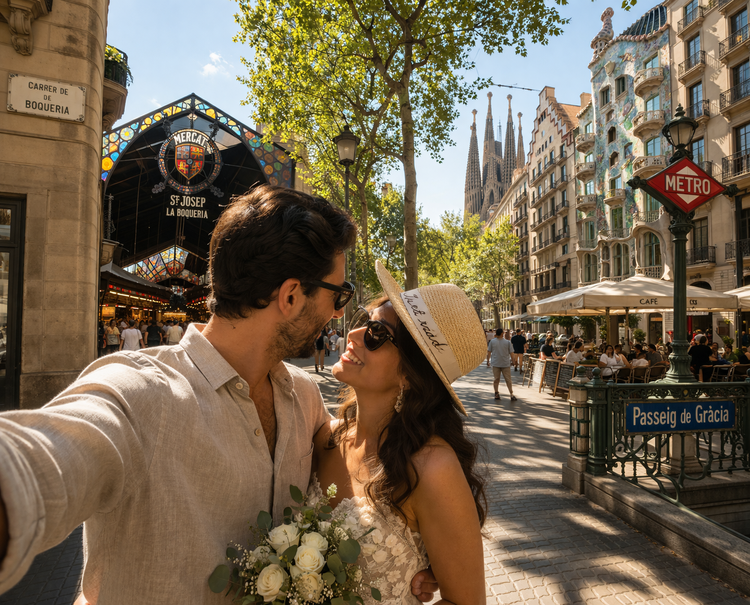
You smell it before you see it — garlic and olive oil drifting out of a kitchen you'll never find but will follow half a block before you realize what you're doing. You hear espresso cups hitting saucers in El Born. You feel the hum of conversation spilling from plazas long after midnight. There's music somewhere, always. And someone is eating something extraordinary at every hour of the day.
Then Mallorca is the exhale.
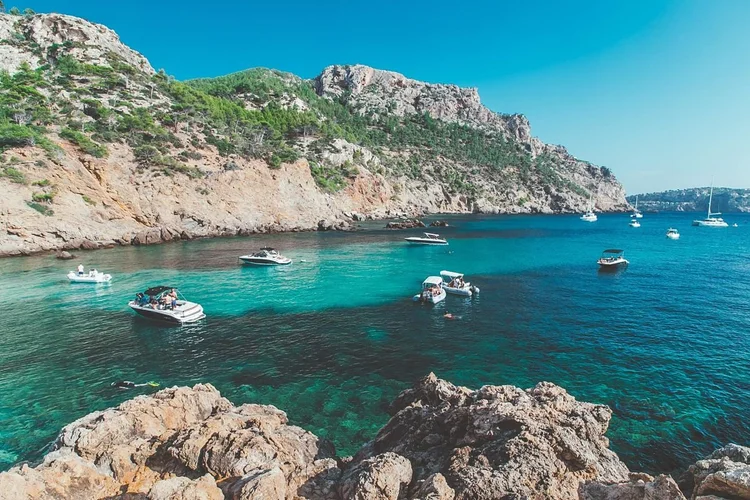
Salt in the air. Pine trees warming in the afternoon sun. Waves brushing against hidden coves so clear the water looks almost digital. Afternoons stretch longer here — long enough for a three-hour lunch of pa amb oli (the Mallorcan answer to bruschetta: dense bread rubbed with ripe tomato and olive oil, loaded with local cheese and sobrasada) that somehow turns into a sunset you didn't plan to watch but can't look away from.
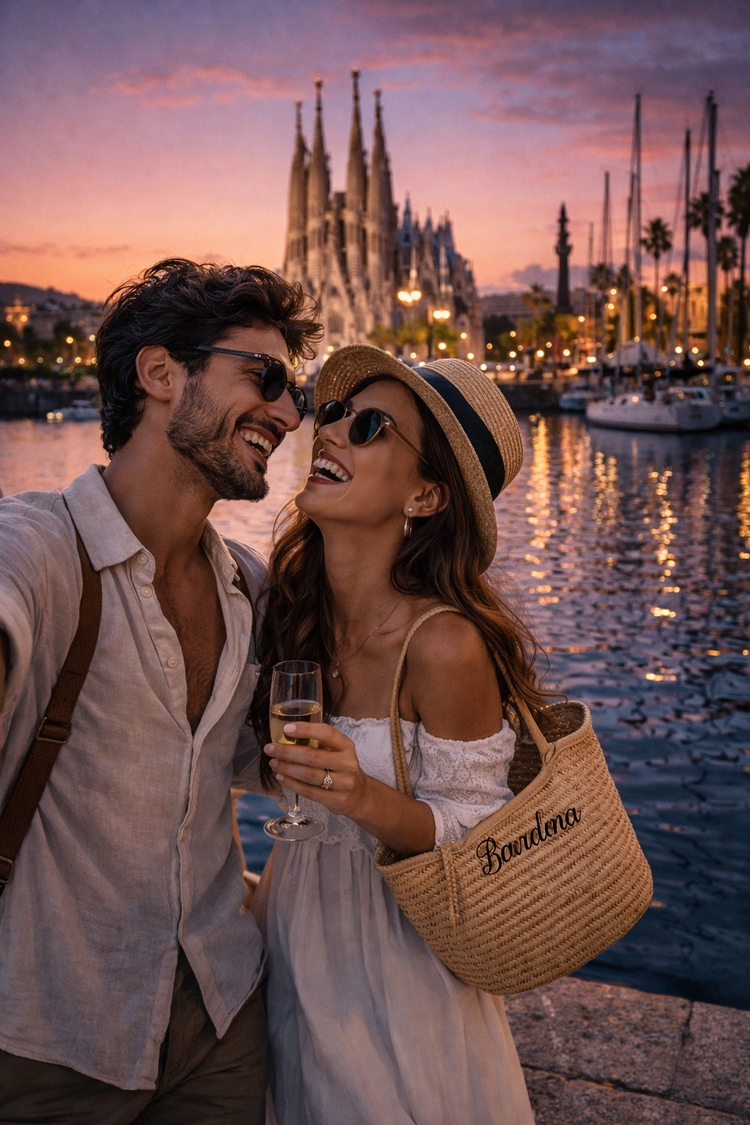
Together, Barcelona and Mallorca create one of the most perfectly balanced Europe honeymoon itineraries: culture and calm, architecture and coastline, pintxos bars and pine-shaded coves. If you want a honeymoon that feels alive without being exhausting — this is it.
"The best version of this honeymoon is organized around eating. Everything else is just the backdrop."
Honest Fit Check
Is a Barcelona & Mallorca Honeymoon Actually Right for You?
This is not the honeymoon for everyone — and I mean that as a compliment. It's sensory, cultural, and deeply romantic in a way that doesn't involve a single swim-up bar. If you want turquoise water and a frozen cocktail handed to you without moving, I have other plans for you. But if any of the below sounds like you, keep reading.
You believe dinner is an event
Not a stop between activities. A two-hour, multi-course, linger-over-the-wine kind of event.
Gaudí is on your vision board
You've seen Sagrada Família in a photo and felt something. You need to stand inside it.
You want a beach that feels like a secret
Not a resort beach with lounge chairs. A hidden cala with turquoise water and three other boats.
You'd take a cooking class over a spa day
Making paella with actual socarrat together is the kind of memory that doesn't fade.
You find long lunches romantic
Three hours at a seaside table. Grilled fish. Spanish rosé. Nowhere to be. That's the whole thing.
You want one great thing per day
Not ten stops on a bus. One thing, done with intention, then back to the terrace.
The Pacing
How to Structure 9–12 Days in Barcelona & Mallorca
This itinerary works because it gives you contrast without chaos. Barcelona first — let the city teach you how to eat, how to wander, how to stay up late for a reason. Then Mallorca, where the pace drops, the water gets clearer, and the whole trip shifts into something more intimate. Here's how I'd pace it:
Barcelona — Stay in El Born, Always El Born
El Born is Barcelona's most romantic neighborhood: medieval alleyways, converted palaces, tapas bars that have been there for decades and look it. Stay here and you're walking distance from everything — La Boqueria, the Gothic Quarter, the Picasso Museum, the best croquetas you will ever eat.
Spend your mornings at Mercat de Santa Caterina (the locals' alternative to La Boqueria — better produce, that extraordinary undulating tiled roof, a fraction of the tourists). Buy something. Eat it immediately. Then book a private cooking class for one afternoon and actually make paella together — the real kind, over an open flame, with a proper socarrat at the bottom. That experience is the one you'll still be talking about.
Evenings belong to El Born. Start with vermouth at a marble-topped bar around 7pm, the way the locals do. Move slowly through the night — anchovies, jamón, cava, croquetas de jamón, repeat. Argue pleasantly about which stop had the best ones. (It's the second one. It's always the second one.)
Before you leave Barcelona: Park Güell at golden hour, when the mosaics glow and the entire city hums below you. And the Bunkers del Carmel for the view that doesn't make it onto the tourist postcards.
Mallorca — Palma First, Then the Sea
The flight from Barcelona to Mallorca is under an hour. By the time you've landed and cleared the airport, the air already smells different — salt and pine and something warm that doesn't have a name. That's Mallorca.
Start in Palma. The Santa Catalina neighborhood is your first dinner: a wine bar, small plates, grilled octopus with smoked paprika, a carafe of local white wine. This is Mallorca's foodie pocket and almost no tourist finds it on their first night. Stay two nights in a boutique hotel tucked inside a restored stone building — the kind where the walls are three feet thick and the roof terrace looks out over cathedral spires.
Then move to Port de Sóller or Deià for the back half of your stay. The road there winds through the Serra de Tramuntana mountains past almond groves and orange trees, and you'll pull over at least twice for a view you can't believe is real. Deià is where Robert Graves lived and wrote for forty years. You'll understand why the moment you see it.
On Mallorca, your days are for coves. Find a cala in the morning — water so clear it looks filtered — and spend two hours in it. Lunch at a seafood restaurant where the dining room practically floats over the water. Order whatever the waiter suggests. It will be right. Dinner is late, outside, with the sound of the sea and no particular plan.
The Important Section
Let's Talk About the Food
✦ A Personal Note
I have strong feelings about Spanish food. Not "I enjoy it" feelings — full opinions, region by region, dish by dish. The kind that come from reading too many menus and not nearly enough restraint.
Barcelona's food is an extension of the city itself: layered, confident, a little chaotic in the best way. Manchego aged to three different sharpnesses. Jamón carved to order by someone who has been doing it for thirty years. Anchovies that taste nothing like the ones at home. The market is the best possible introduction — but the real Barcelona food education happens at night, in a bar the size of your living room, when someone behind the counter puts down a plate you didn't order but should have.
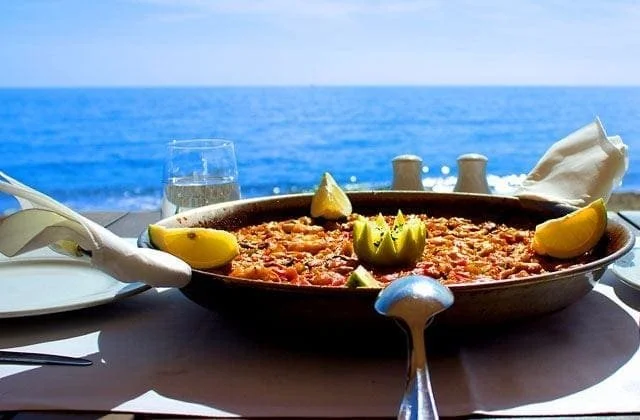
The paella question: make it, don't just eat it. A private cooking class where you actually build the dish — choosing the rice, managing the heat, waiting for the socarrat — is a completely different experience from ordering it at a restaurant. You'll never eat paella the same way again. That's the goal.
Mallorca's food is quieter and more elemental, which is exactly right for the second half of this trip. The island's culinary identity is rooted in things that are slow and honest: pa amb oli at a hillside café, grilled fish caught that morning, ensaïmada (a feather-light spiral pastry dusted with powdered sugar) with your morning coffee. Almonds and citrus grow everywhere here — in the mountain orchards, along the coastal roads — and once you know that, you taste them in everything.
Seek out a seafood lunch at a cala. The restaurant practically floats over the water. Order whatever the waiter suggests. It will be the right answer every time.
Barcelona: What to Eat
- Pan con tomate — bread rubbed with tomato and olive oil, everywhere, always
- Jamón Ibérico, carved at the bar
- Anchovies from l'Escala — not what you think
- Croquetas de jamón — judge each bar by these
- Paella with proper socarrat (the crispy bottom)
- Vermouth at 7pm, the local way
Mallorca: What to Eat
- Pa amb oli — the island's version of everything
- Sobrasada — a spreadable cured sausage worth knowing
- Ensaïmada — the spiral pastry with your morning coffee
- Grilled fish of whatever came in that morning
- Local almonds and citrus in almost everything
- Mallorcan wine — underrated, genuinely good

Hidden Gems That Actually Matter
Every Barcelona blog will tell you to see the Sagrada Família and Park Güell. They're right — do both. But here's what most people miss:
Bunkers del Carmel (Barcelona)
Panoramic city views without the Park Güell crowds. Go at sunset. Bring something to drink. The light on Barcelona from up here is one of the best free things in Europe.
Mercat de Santa Caterina (Barcelona)
A more local alternative to La Boqueria — better produce, the extraordinary undulating tiled roof designed by Enric Miralles, and almost no tour groups before 9am.
Cala Deià (Mallorca)
A small, cinematic cove that feels genuinely tucked away from the world. Bring snorkels. The water at the edges is absurdly clear. There's a restaurant above the rocks that's worth the walk.
Valldemossa Village
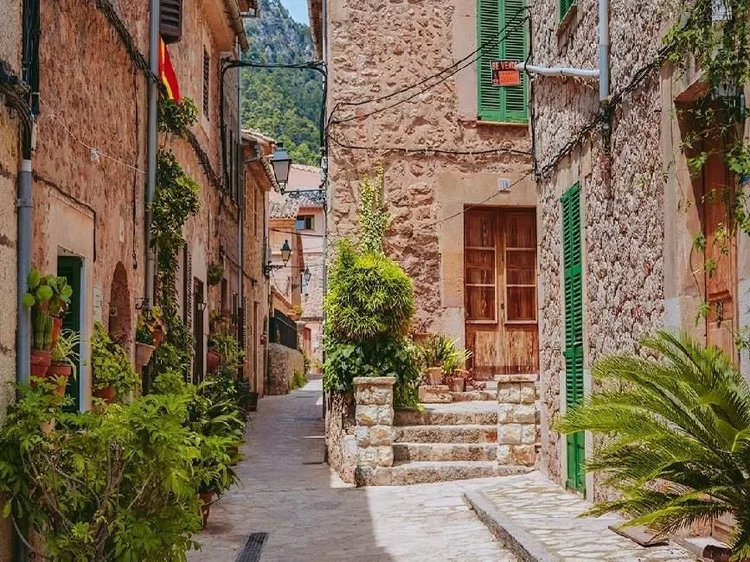
Stone streets, mountain views, quiet cafés, and almost no tour buses. Chopin wrote music here in the 1830s — specifically, the Raindrop Prelude, during a storm. You'll understand why.
Santa Catalina Neighborhood (Palma)
Mallorca's best food neighborhood, without the tourist overlay. Wine bars, small-plate restaurants, a local market. This is where you want dinner on your first night on the island.
The Drive Through Serra de Tramuntana
Most people drive through it to get somewhere. Give it a day. Almond groves, orange trees, villages that feel frozen in the right century. Pull over whenever something is beautiful. It will be often.
The Numbers
Barcelona & Mallorca Honeymoon Budget & Timing
Spain is genuinely excellent value compared to Italy or France — especially when you lean into boutique stays and neighborhood dining rather than chasing Michelin stars every night (though one, at least once, is worth it). Most couples find that the best money they spent was on a private market tour and cooking class, and a sea-view suite for at least a few nights in Mallorca.
Worth Splurging On
- A boutique design hotel with rooftop terrace in Barcelona
- A sea-view suite in Port de Sóller or Deià
- A private market tour and cooking class
- A guided architecture tour with a local
- One tasting menu dinner in Barcelona
Easy to Save On
- Fly between Barcelona and Mallorca — skip the ferry
- Neighborhood tapas bars over fine dining every night
- Travel in May–June or September
- Barcelona's public transit — efficient, easy, cheap
- Book castle visits and markets independently
"Spain offers exceptional value compared to Italy or France — without giving up a single thing on the romance front."
One Note on July & August
July and August are beautiful, but peak season means higher prices, more tourists at every cala, and limited hotel availability in Mallorca. May, June, and September are the sweet spots: warm Mediterranean weather, longer golden hours, and a Spain that actually has room to breathe. October works too if you want the quietest version.
FAQ
Questions About a Barcelona & Mallorca Honeymoon
When is the best time to honeymoon in Barcelona and Mallorca?
May–June or September–October. Warm Mediterranean weather, fewer crowds, better hotel availability, and lower prices. July and August are beautiful but peak season — you'll share every cala with a lot of other people and pay significantly more for the privilege.
How many days do you need?
9–12 days is the sweet spot. Spend 4–5 nights in Barcelona for culture and food, then 4–6 nights in Mallorca for beaches, mountain villages, and the kind of relaxed pace that actually restores you. You can technically do it in 7–8 days, but you'll feel it.
Is Mallorca better than Barcelona for a honeymoon?
They serve completely different purposes. Barcelona is architecture, nightlife, markets, and big-city energy. Mallorca is beaches, hidden coves, mountain villages, and quiet island life. The best honeymoon has both — that's the whole point of pairing them.
Should we stay in Palma or Port de Sóller?
Palma for historic charm, rooftop bars, and a walkable food scene. Port de Sóller or Deià for dramatic coastal views, boutique romance, and total decompression. Many couples split their time in Mallorca between both — two nights in Palma, then move to the coast.
Is Spain expensive for a honeymoon?
Compared to Italy or France, Spain is genuinely excellent value. A Barcelona and Mallorca honeymoon typically runs $12,000–$20,000 for 9–12 nights (land only), depending on season and hotel category. You get more for your money here than almost anywhere else in Western Europe.
Do you need a car in Mallorca?
Yes — if you want to find the hidden calas, mountain villages, and almond grove drives that make Mallorca feel like a secret. Barcelona doesn't need one; public transit handles everything beautifully. The car is entirely a Mallorca thing.
Is paella actually better in Spain?
Yes. Specifically, the version you make yourself in a cooking class with a proper socarrat. But also yes in general. There is no comparison.
Ready to Plan Your Barcelona & Mallorca Honeymoon?
I'll handle the routing, the boutique hotels, the cooking class bookings, and the cala recommendations — so all you have to do is show up and eat well.
Let's Start Planning